
Biodiversity Assessment and Management for Mangamuka Gorge Slip Repairs
The details
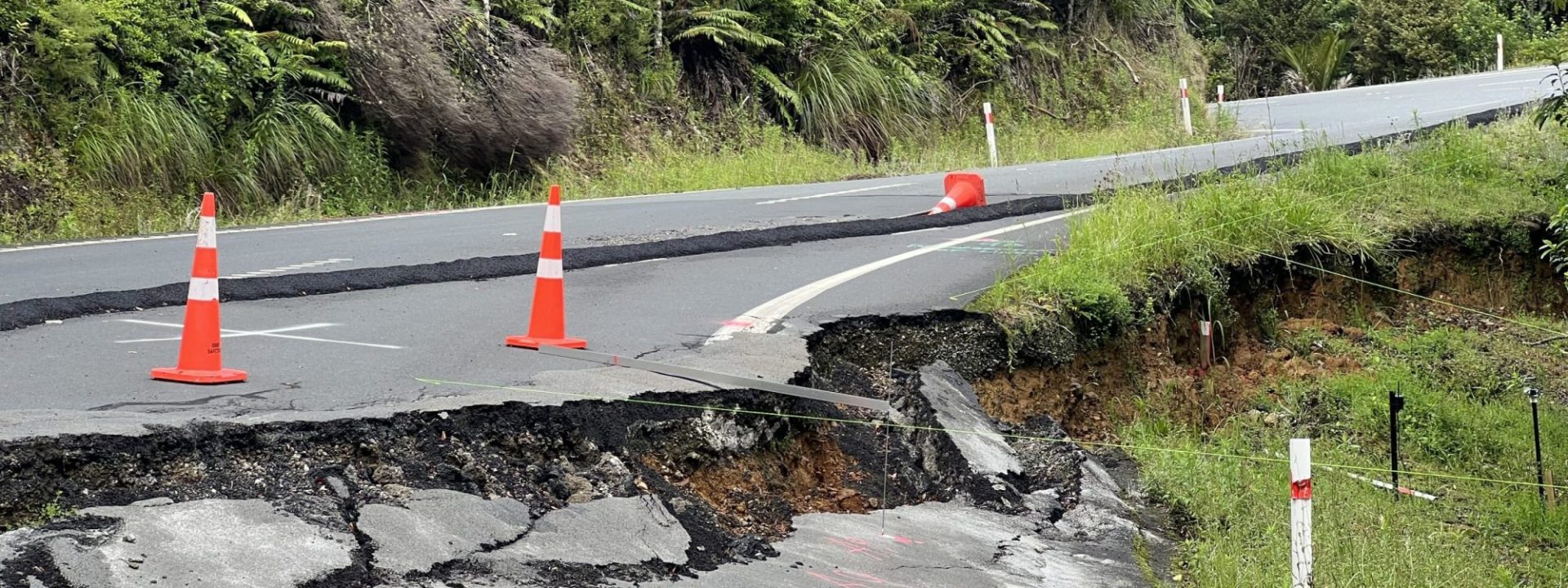
Mangamuka Gorge is the route State Highway 1 takes through the Maungataniwha Ranges, connecting Kaitaia and the upper Far North to the rest of Te Tai Tokerau and Aotearoa New Zealand. In August 2022, severe weather caused significant slip damage, closing the road.
The project involves urgent repair of the slips, including immediate drainage works to divert stormwater away from active sites. Seven slips have been identified as critical, with a high risk that sections of road could be lost entirely if they aren’t repaired in time. These critical slips need to be addressed first, to allow the remaining slips to be repaired ahead of the expected opening date.
The challenge
The urgency of the repair work has been made harder by ongoing severe weather, which continues to cause additional slips and damage. On top of that, the project sits within a sensitive and ecologically and culturally significant environment — the old growth forest of the Maungataniwha Range is home to a range of threatened and at-risk indigenous species. Balancing the need for urgent repairs with careful, considered environmental and cultural engagement has been central to how this project needed to be delivered.
Our approach
We carried out a Biodiversity Assessment across the site to identify its habitat and ecological values, then developed a Biodiversity Management Strategy to guide how biodiversity effects are managed at each slip site for the life of the project.
The assessment confirmed the old growth forest supports threatened and at-risk species, so we developed six standalone management plans covering bats, lizards, invertebrates, birds and kiwi, kauri dieback, and weeds and pests. A tailored Ecological Impact Assessment for each slip site identifies which plans apply, the extent of works, and likely effects, informing the Compensation Plan that guides mitigation and offsetting.
We’ve worked closely alongside the construction team throughout, ensuring ecological resources are available exactly when needed. Hapū representatives from Te Paatu and Ngā Hapū o Mangamuka join every site visit, and the team meets regularly with the Department of Conservation.
Outcomes
Our biodiversity assessment and management work is helping Waka Kotahi deliver urgent repairs across a highly sensitive landscape, with tailored ecological safeguards in place at each of the seven critical slip sites and ongoing hapū and DOC engagement built into every stage of the work.