Eveline Street Stormwater Outfall
The details
Since the 1960s, Eveline Street had been subject to landslip events following heavy rain. Kaipara District Council (KDC) identified that stormwater control was required to reduce the risk of landslips damaging neighbouring properties.
We were engaged to review the existing concept plan, obtain a detailed design and project manage the works from design through to construction and handover.
The challenge
KDC first investigated stormwater management options back in 1985. Seven Geotechnical reports were commissioned between 1985 and 2022, but none of these had resulted in a viable design or a completed project.
This was a complex project. It meant engaging with at-risk property owners, consulting the community on carparking and beach access, and working with Heritage New Zealand Pouhere Taonga and Te Uri o Hau on potential impacts to heritage and cultural resources.
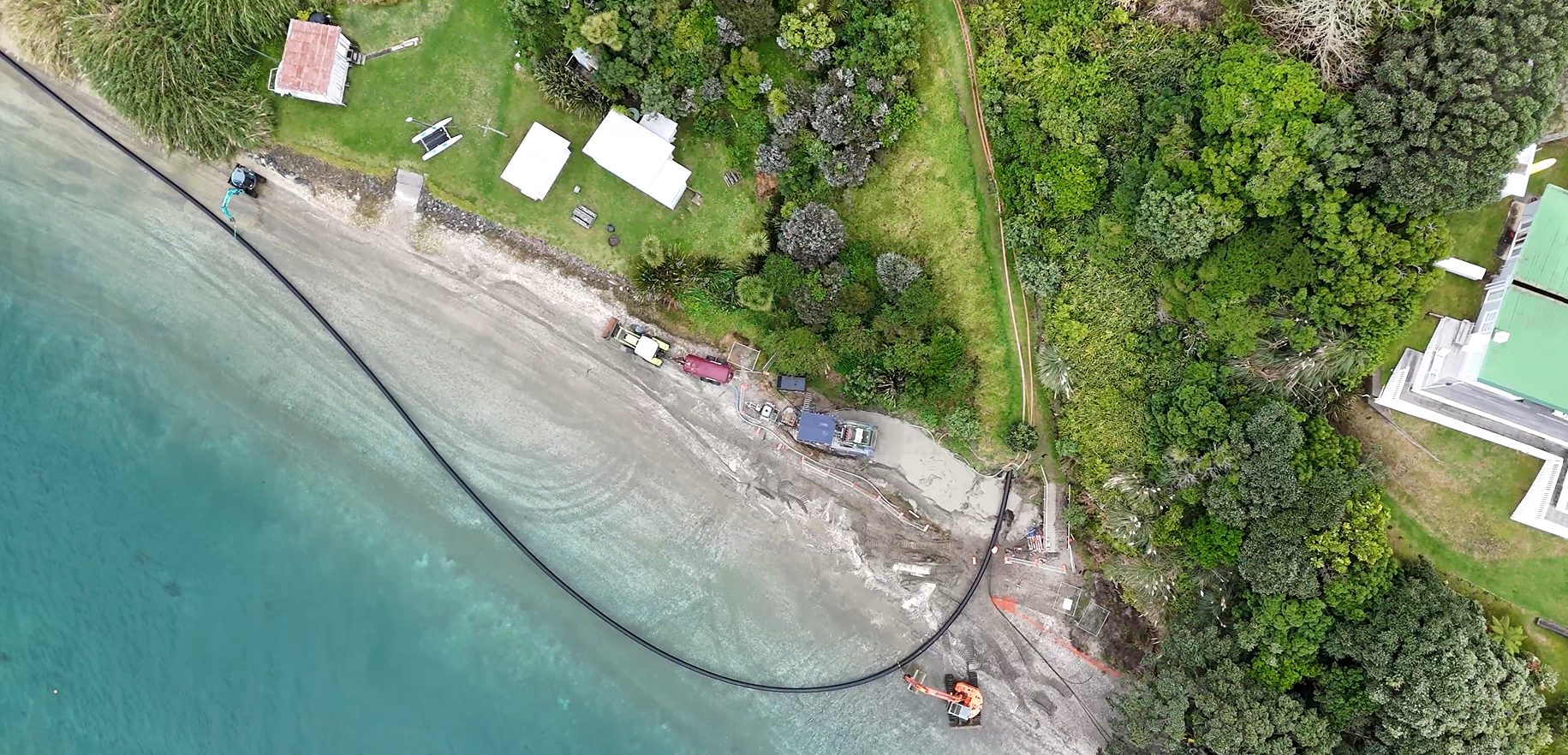
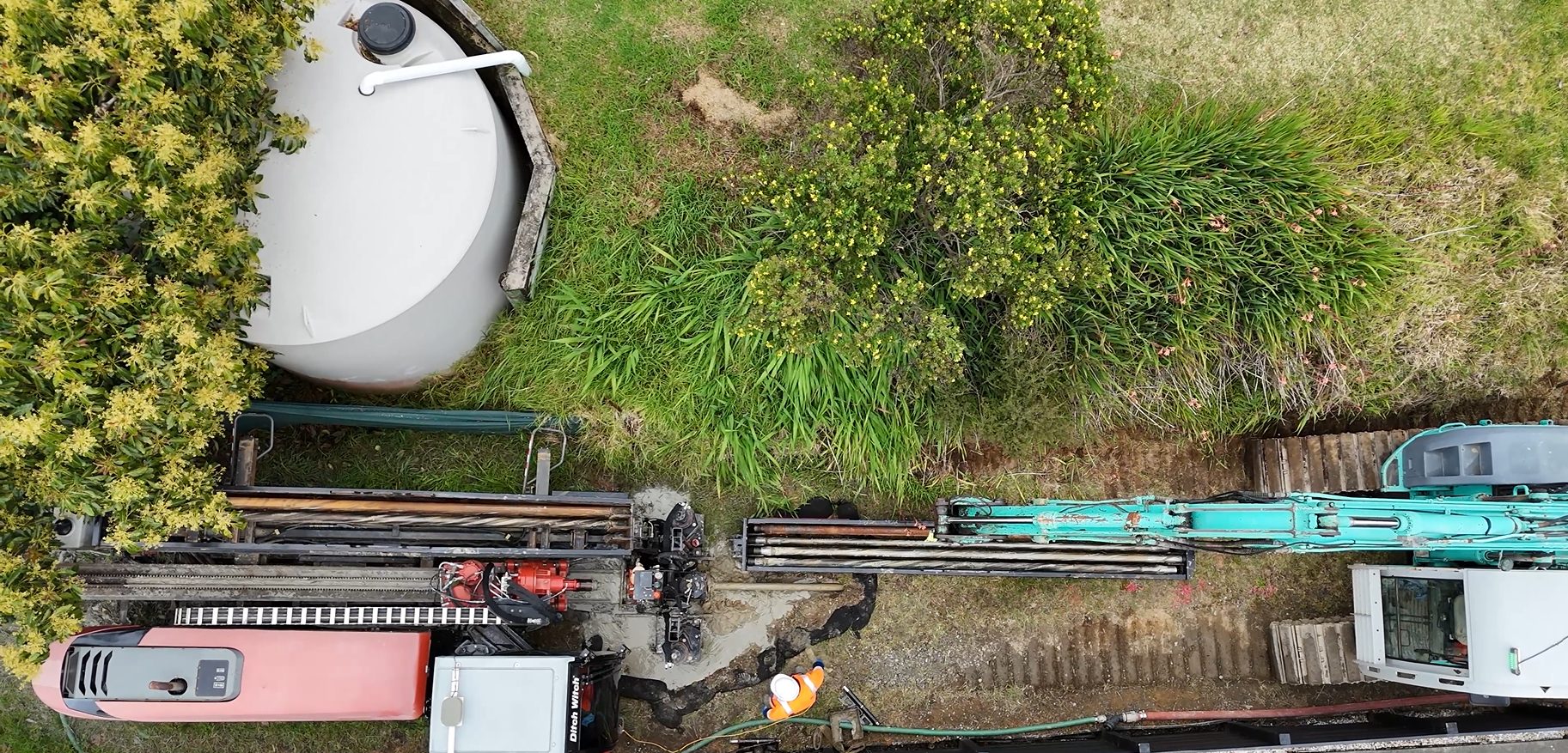
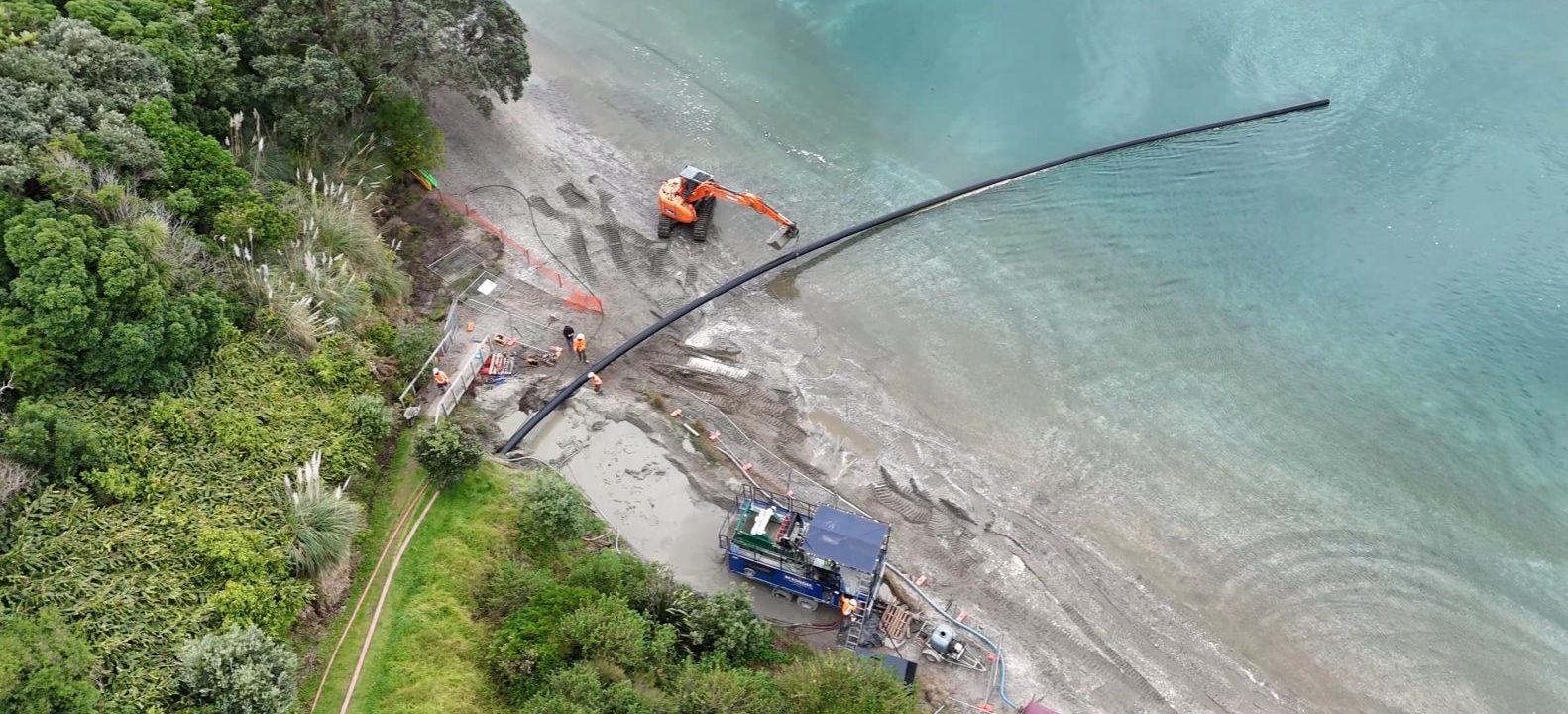
The topography of the site required complex construction methods including drone surveying, directional drilling through a slip plane, floating a pipe up the Mangawhai estuary, and the construction of a bio-retention pond. All of which had to be achieved while complying with resource consent conditions for vegetation clearance, earthworks in a coastal riparian area and stormwater discharges.
Our approach
Eveline Street’s stormwater issues had been a longstanding problem for KDC. We’re problem solvers who take responsibility for projects and create the momentum to get them done, and we were determined to find a workable solution here.
We started by reviewing the previous geotechnical reports and designs, so a practical, detailed design could be worked through with contractors and residents. From there, we supported KDC through contract tender, contract award, construction supervision, Management, Surveillance and Quality Assurance (MSQA) and handover — keeping affected residents engaged the whole way through.
Outcomes
The project was completed within budget. Physical works included:
- A mountable kerb to enable parking
- Three catch pits and a collection manhole in the cul-de-sac
- 120m of stormwater outflow pipe by horizontal direction drilling
- A planted biofiltration area and timber weir to manage excess overflow to the beach.
- Planting within the biofiltration area and along the walkway.
The project reduced land instability risk in an area that has a well-documented history of landslips. The bio-retention device treats water before it reaches the estuary, supporting coastal policy values and Te Mana o Te Wai.