
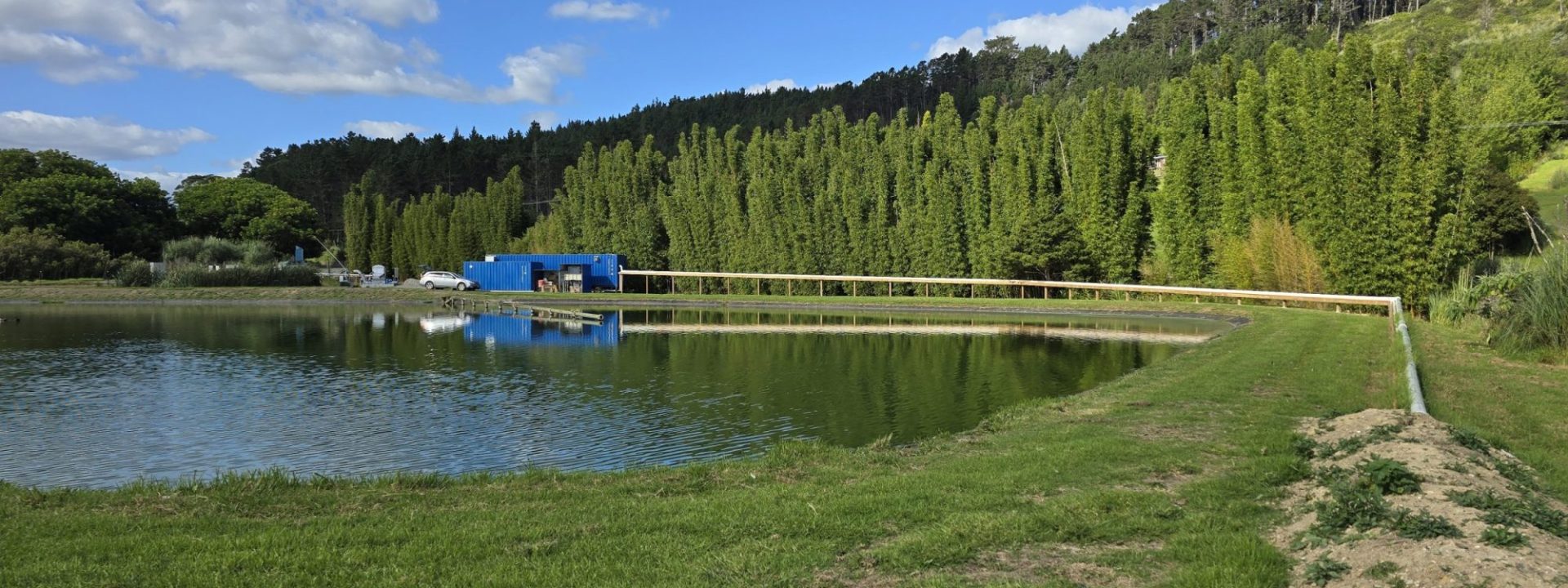
Rawene Wastewater Treatment Plant – Better Off Funding Project
The details
This project is delivered under the Better Off Fund programme, a central government initiative supporting communities as local authorities transition away from managing Three Waters infrastructure.
The Rawene Wastewater project secured funding to improve environmental outcomes associated with the existing wastewater treatment plant. The working group’s overall goal is keeping wastewater out of the Omanaia Awa and Hokianga Harbour and supporting the restoration of the mauri of the wai for mana whenua and the wider community.
The main component has been installing a fully operational electrocoagulation treatment system, acting as a secondary treatment process to improve the quality of wastewater discharged from the existing plant. Alongside this, the project is progressing towards a a discharge to land site for future development.
The challenge
The Rawene Wastewater Treatment Plant presents a complex historical and environmental issue, with existing discharges contributing to impacts on the Omanaia Awa and the Hokianga Harbour.
Integrating electrocoagulation treatment into an operational municipal wastewater treatment plant has been a key challenge. The existing pond-based system and ongoing plant performance had to be maintained while new treatment infrastructure was installed and commissioned.
Key challenges include:
- Integrating electrocoagulation treatment within an operational plant while keeping the existing system fully functional
- Coordinating supporting infrastructure upgrades, including power supply and electrical works
- Progressing multiple parallel workstreams, including discharge to land, septage treatment, and future WWTP planning
- Coordinating a multi-stakeholder working group including iwi/hapū, Council, and technical advisors
- Aligning delivery with funding constraints, programme milestones, and evolving regulatory requirements
Our approach
The project has been delivered through a collaborative, community and hapū-led process, supported by Council and technical specialists.
Our role has been to facilitate alignment between stakeholders, ensuring project delivery remained consistent with the working group’s objectives and the wider environmental outcomes sought for the site.
Key elements of the approach include:
- Supporting a multi-stakeholder working group, including iwi/hapū, Council, and technical advisors, to work toward a shared objective
- Facilitating clear and structured communication between parties to enable informed decision-making
- Applying practical project management and technical understanding to guide discussions toward achievable outcomes
- Coordinating delivery activities to ensure installation and commissioning of the electrocoagulation unit could occur within an operational plant environment
- Supporting the development of longer-term options, including discharge to land and future treatment plant planning
This approach let technical delivery progress alongside strong stakeholder engagement, ensuring outcomes remained aligned with both community expectations and project objectives.
Outcomes
The project has progressed a programme of works aimed at improving wastewater outcomes for the Rawene community and surrounding environment.
Key outcomes to date include:
- Procurement, installation, and commissioning of an electrocoagulation treatment system
- Implementation of supporting infrastructure to enable the operation of the new treatment process
- Advancement into discharge to land and future wastewater treatment plant options
- Progression of septage treatment solutions as part of the wider system strategy
- Support of a strong community and hapū-led governance framework shaping project direction